
Thanks for joining me! It is my hope that the information I share with you in the this blog will help inspire and motivate you as you continue in your journey towards wellness.
Good company in a journey makes the way seem shorter. — Izaak Walton

As a licensed bodywork professional, the biggest issues I’ve seen in the last couple of years have had to do with low back pain and emotional stress. My clients are often baffled (before the session) and in awe (after the session) when I consult with them on how these two issues could possibility be interrelated as it pertains to how they feel physically, mentally and emotionally. Yes, you can have lower back pain from ailments like repetitive use injury or from sitting too long at work. Yes, you can experience emotional stress like anxiety as a result of being under constant stress. But what if the pain or the anxiety did not come from either of the aforementioned problems? What if they were the result of muscular strain, tension or injury in another area of the body? That’s what I want to talk to you about today! Can I let you in on a little secret?
Deep within the pelvic wall of our bodies lies a muscle known as the psoas major. 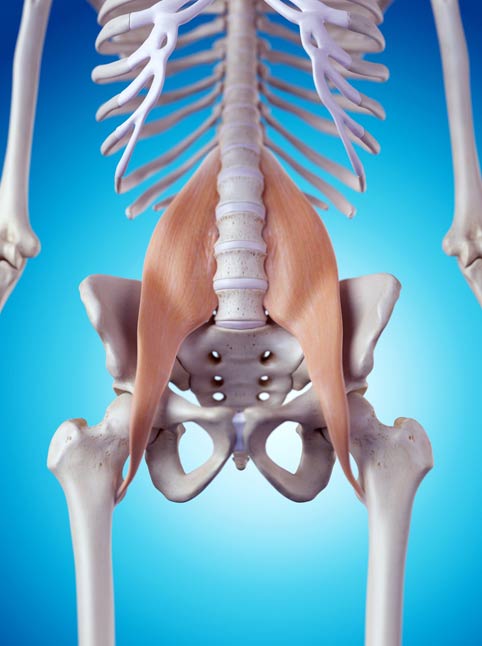 Although this muscle is one of the most important muscles in the body, it is also probably the most unknown or forgotten one. Why is it so important you say? Well Jo Ann Staugaard-Jones calls it a “realtor’s dream” due to it’s location, location, location! It is important because it is the only muscle that connects the upper body to the lower body. It originates at the T12 – L5 vertebrae and inserts at the lesser trochanter of the femur bone on both sides of the body.. This means that this muscle connects the spine to the legs. As a result, the psoas major is responsible for, or involved in, most of the movements we make throughout the day (including, but not limited to sitting, standing and walking).
The psoas major affects us mentally and emotionally as well. It is the muscle that engages when we have an adrenaline rush in preparation to run. It is also the muscle that causes us to roll up into the fetal position when we are threaten with bodily harm or injury. That’s why it is known as the “fight or flight” muscle. When the psoas is under constant stress it causes the body’s central nervous system to continuously engage the sympathetic nervous system which can cause the brain to be in a constant state of urgency. Over time this can lead to a variety of emotional disorders/dysfunctions like anxiety. And vice versa, emotional disorder/dysfunction can lead to having major issues in the psoas major.
The psoas major is one of the main muscles of the hip flexor group of muscles. Issues related to the psoas and other hip flexor muscles can be addressed through a variety of bodywork disciplines like massage therapy, physical therapy and exercise (conventional, yoga, Pilates, etc.). Clients often ask what exercises are best to rehab or alleviate psoas and hip flexor issues. The truth is there are many exercises that can help fix this problem. However, what matters is putting the right exercises into the right system to help optimize psoas and hip flexor health.
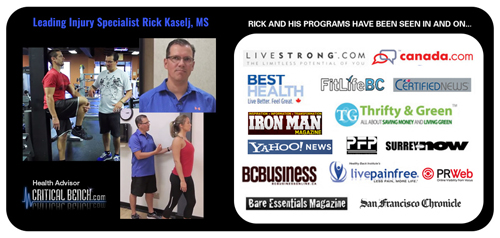
One of the best systems I’ve seen out there is the one created by Rick Kaselj of CriticalBench.com. Rick is a Kinesiologist, personal trainer, exercise rehabilitation specialist, writer and creator of exercise rehabilitation programs like Unlock Your Hip Flexors. In this program, Rick focuses on the physical, as well as the mental/emotional aspects of the psoas and hip flexor muscles. The workouts and information provided in this program can be adapted to any fitness level and lifestyle. From the competitive athlete, to the desk jockey, to the stay at home parent, to the couch potato, Rick “gives you a practical, easy-to-follow program you can use today for instantly releasing your hip flexors for more strength, better health and all day energy.” You will also receive some great bonuses that will help strengthen your hamstrings and show you how your diet can help combat inflammation in your body.
So if you are ready to be free of nagging joint pain in your legs, lower back or hips, strengthen your immune system, experience greater energy during your workouts or work days, and possibly reduce your anxiety then there are three things you need to do. First, consult with your primary care physician to make sure your pain or discomfort is not a result of some other major health illness or disease. Then connect with an experienced bodywork profession in your area who can design the right treatment plan to suit your needs. Finally, head on over to CriticalBench.com and pick up your copy of the Unlock Your Hip Flexors program by clicking on the picture below. You will even receive a couple of great bonuses that will help strengthen your hamstrings and provide you with a nutritional plan that will help combat inflammation in your body.
P. S. After you have tried the Unlock Your Hip Flexors program feel to come back and share your experience with us. Until then… Be well!!
References:
- Trail Guide to the Body: How to Locate Muscles, Bones and More
by Andrew Biel - The Psoas: Yoga Journal by Liz Koch
- The Vital Psoas Muscle: Connecting Physical, Emotional, and Spiritual Well-Being by Jo Ann Staugaard-Jones
 Wellness By Shack